The Best Medical Terminology Books Ever Made
A practicing nurse’s picks for nursing students, new grads, and anyone who has ever stared at the word cholecystectomy and lost a little hope.
By Samuel Rader, RN, BSN, Nurse Term Owner · June 2026
Medical terminology is one of those subjects nursing programs teach early and then quietly expect you to master forever. Prefixes, suffixes, root words, body systems, abbreviations, eponyms. You memorize a flood of vocabulary, get tested on it, and then walk into your first clinical rotation realizing nobody talks the way the index does.
A good medical terminology book does two things at once. It gives you a system for breaking down unfamiliar words (so a term you have never seen still tells you something useful), and it gives you enough repetition that the common ones become reflex. The books below all do that well, just in different shapes. Pick the one that matches how you actually study.
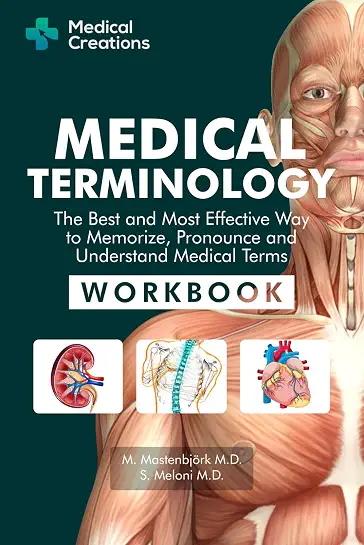
1. Medical Terminology: The Best and Most Effective Way to Memorize, Pronounce and Understand Medical Terms
by Medical Creations (M. Mastenbjörk, S. Meloni, David Andersson)
The reason this one shows up first is that it is genuinely written for self-study, not lecture. The structure walks you through prefixes and suffixes by body system, gives you the etymology of each root word, and includes pronunciation guides that are easier on the eye than most textbooks. It is concise without being shallow. Beginners can read it cover to cover in a few weeks; experienced nurses can use it as a refresher between recertifications.
Good fit for: nursing students starting their first term, pre-nursing students preparing for an accelerated program, or any returning RN who has been out of school long enough that hemoptysis needs a refresher.
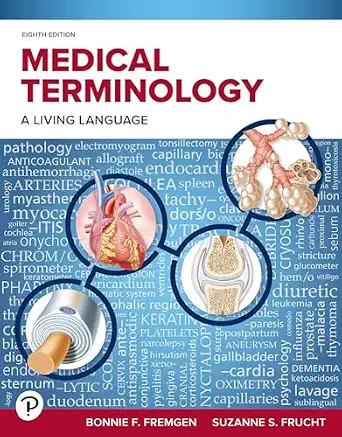
2. Medical Terminology: A Living Language
by Bonnie F. Fremgen and Suzanne S. Frucht
The classic textbook used in many nursing and allied health programs. A Living Language is more comprehensive than the Medical Creations book and correspondingly heavier. It organizes terminology by body system, includes case studies, has end-of-chapter review questions, and ships with online study tools. Best paired with a nursing school course rather than solo study, because the depth can feel overwhelming without a syllabus to follow.
Good fit for: students enrolled in a formal medical terminology course who want the official textbook, or programs and instructors looking for a teaching resource with built-in exercises.
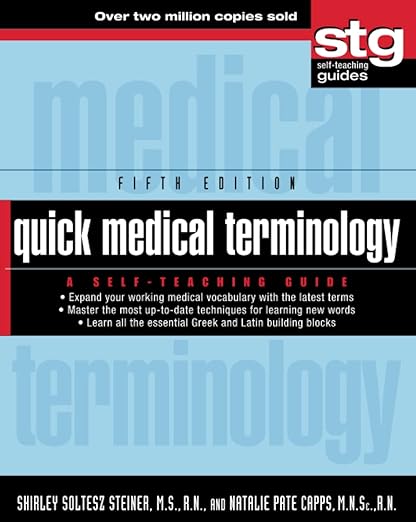
3. Quick Medical Terminology: A Self-Teaching Guide
by Shirley Soltesz Steiner and Natalie Pate Capps
The self-teaching format is the star here. Each chapter gives you a short reading, then immediately tests you with fill-in-the-blank exercises whose answers sit in the next paragraph. You learn, you check, you keep going. It is more interactive than most textbooks and less repetitive than flashcards, which makes it strong for adult learners studying at the kitchen table.
Good fit for: adult learners returning to school, CNAs and medical assistants moving into nursing programs, or anyone whose brain does better with active recall than passive reading.
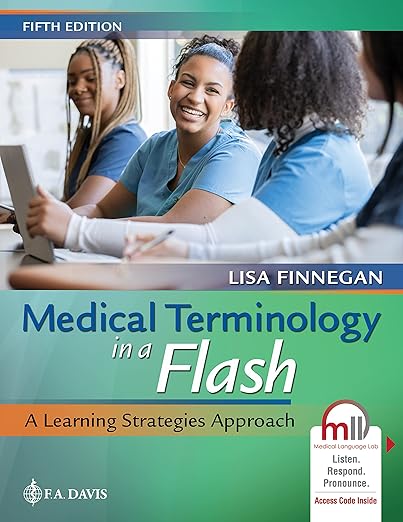
4. Medical Terminology in a Flash!
by Lisa Finnegan
Spiral-bound, flashcard-style, designed to be carried in a backpack and used in five-minute increments. If you are a nursing student who studies on the bus or between clinicals, the form factor matters. The content covers the same prefixes and root words as the textbooks above, just in a quicker, more portable format. Pairs nicely with one of the deeper books when you want both the long-form learning AND the on-the-go review.
Good fit for: nursing students who study in short bursts, commuters, people who learn better from active recall than reading.
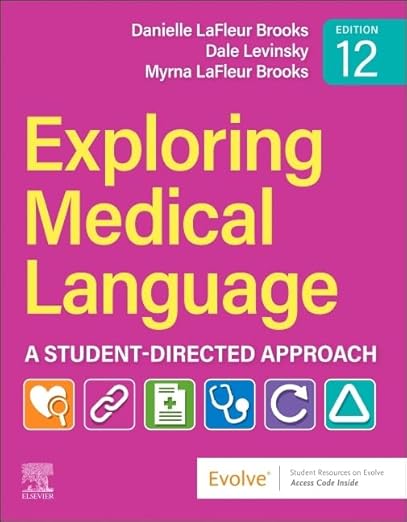
5. Exploring Medical Language: A Student-Directed Approach
by Myrna LaFleur Brooks and Danielle LaFleur Brooks
Another standard nursing-program textbook, this one built around a programmed-learning approach. Each chapter introduces new word parts, then asks you to build and translate terms on the spot. The visuals are cleaner than most, the case studies feel more clinically realistic than the average textbook, and the online support tools (audio pronunciation, electronic flashcards) are well-integrated.
Good fit for: nursing programs assigning a single textbook for the whole medical terminology course, and students who like visual reinforcement.
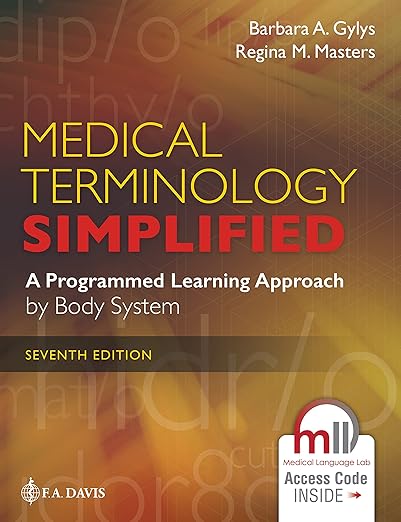
6. Medical Terminology Simplified
by Barbara A. Gylys and Regina M. Masters
Pitched at students who want the gentlest possible ramp into medical language. Medical Terminology Simplified breaks terms into smaller and smaller pieces, then rebuilds them in front of you. Great for students who have struggled with terminology in the past or who learned English as a second language. Less advanced than A Living Language, but more digestible for the same reason.
Good fit for: nursing students who want the lowest learning curve possible, ESL students in nursing programs, or anyone who has tried a heavier textbook and bounced off it.
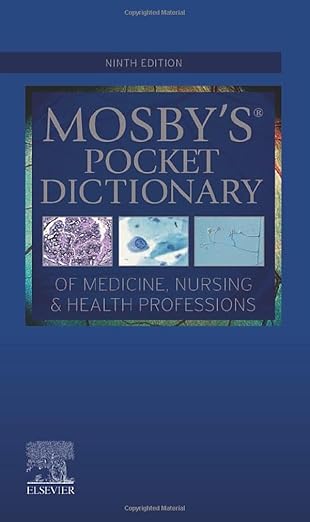
7. Mosby's Dictionary of Medicine, Nursing & Health Professions
by Elsevier
Not a learning book. A reference book. Every nurse should own one of these, and Mosby’s is the most widely respected. When you are charting at 0300 and you need to confirm the spelling of peritonitis or double-check whether dysphagia is the right word for what you saw, this is the book that ends the debate. The newer editions also include nursing implications and color anatomy plates, which is more than most dictionaries offer.
Good fit for: any practicing nurse, any nursing student past the first semester, any home reference shelf.
Which one should you actually buy?
Honest version:
- If you only buy one book and you are starting from zero: the Medical Creations book. It is the gentlest on-ramp that still covers the full vocabulary.
- If you are enrolled in a course and your instructor assigns one: use whatever they assigned. A Living Language and Exploring Medical Language are the most common.
- If you want something portable for clinicals: add Medical Terminology in a Flash! to whatever main book you choose.
- If you are already practicing and just want a reference on the shelf: Mosby’s Dictionary.
Books are step one. Practice is step two.
Every book on this list teaches you the words. None of them teach you how to use those words at 2 AM when a patient is decompensating and you have ninety seconds to write a note that captures what you saw. That is a different skill, and it only gets built through repetition under conditions that resemble the real thing.
That is the gap Nurse Term is built to close. Prompts are written in everyday English (the way patients actually talk), and you translate them into professional nursing language with instant AI feedback. Use it alongside whichever book you pick above; the two reinforce each other.
For more on why studying medical terminology is one of the smartest ways to study nursing, see Three Big Reasons Medical Terminology Makes You a More Knowledgeable Nurse and Three Ways to Turn Charting Into Creative Writing.
Speak fluent nurse.